
Reviewed · SCUBA DIVING
Discover Scuba Diving
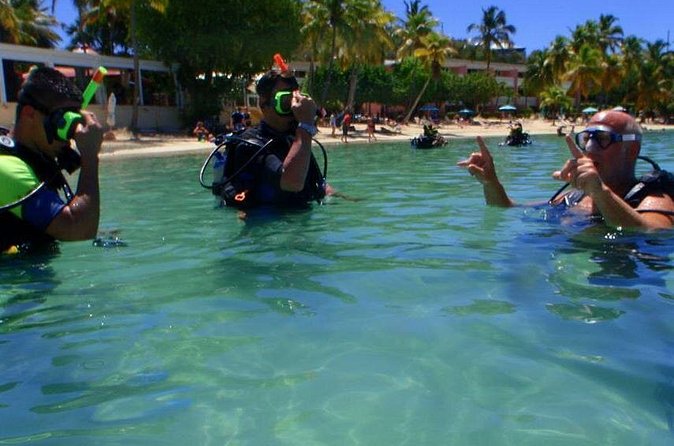
St. Thomas gives you a rare chance to test scuba without committing to a full certification course. Aqua Action Dive Center combines a short classroom lesson, shallow-water practice, and a supervised underwater session where you may see coral, anemones, fish, and even a resting stingray.
I like the patient, close instruction, especially for first-timers who feel nervous about breathing through a regulator. I also like that all equipment is provided and that you can choose between a shallow bay outing and a boat trip toward reefs and wrecks, depending on the plan for your day.
The main thing to clarify before booking is the depth. The bay option may reach only about 15 feet, which is useful for learning but can feel modest if you expect a serious offshore experience. Ask Aqua Action which version is scheduled for your date.
Key points to know before you book
- About three and a half hours: The session fits neatly into a half-day vacation plan, though you should leave extra room around it.
- Built for first-timers: You do not need a scuba certificate, and an instructor stays close throughout the water portion.
- Two possible settings: You may practice from a shallow bay or board a boat for reef and wreck locations.
- Equipment is included: Tanks, weights, BCD, regulator, wetsuit, fins, mask, and snorkel are supplied.
- Small maximum group: The activity accepts up to 12 people, giving the staff room to keep an eye on beginners.
- Plan around your flight: Flying within 24 hours after scuba is not recommended.
What your three-and-a-half hours look like
The session begins with an instructor-led classroom portion. This is not academic busywork. You need to understand how the regulator works, how to clear a mask, how to communicate underwater with hand signals, and how to respond if something feels wrong.
You also receive a Discover Scuba booklet to take home. Keep it if you think you may pursue certification later. The booklet gives you a useful record of the basics, though this experience does not turn you into a certified scuba diver.
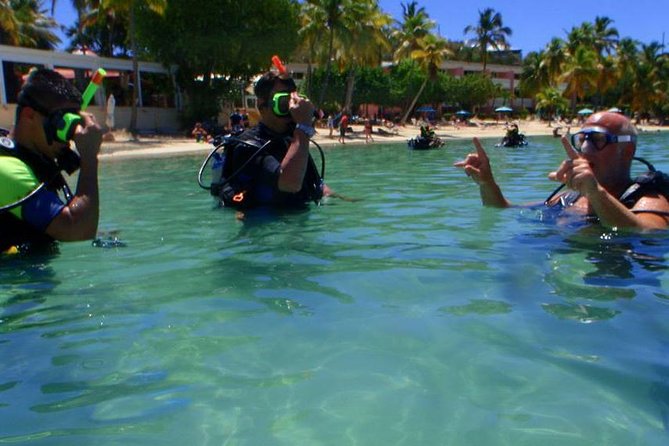
Next comes shallow-water practice. This is the part I consider most valuable for a nervous beginner. You can get used to the mask, fins, breathing equipment, and buoyancy control before moving farther from shore. Instructors remain nearby and help you adjust the gear rather than rushing you into the water.
That patience matters. One participant had trouble with equipment at first, and the instructor replaced the problem item before continuing. You should feel free to speak up if a mask leaks, the regulator feels uncomfortable, or the air supply does not seem right. A good first session is built around comfort and control, not bravado.
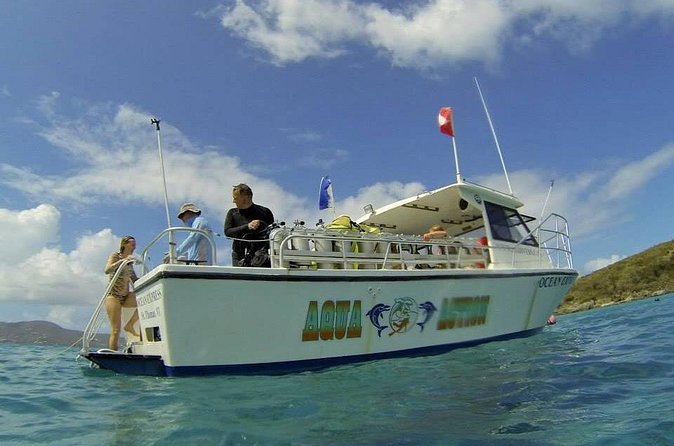
After the practice session, you make the main underwater excursion. The exact format can vary. Aqua Action offers a bay session in shallow water, or a boat outing toward two Caribbean Sea sites with reefs and wrecks.
The bay version is convenient and calm. It limits the time spent getting to the site and lets you focus on basic skills. It can also offer more marine life than you might expect so close to shore, including small fish, coral, and sea anemones.
The tradeoff is depth. A bay outing may reach only around 15 feet. That is perfectly suitable for a first lesson, but it may feel similar to snorkeling if your main goal is dramatic depth or a large wreck. Ask about the day’s location before you pay if the setting matters to you.
The boat option should appeal to you if you want a stronger sense of a traditional scuba outing. Reefs and wrecks off St. Thomas offer more of the scenery people picture when they imagine underwater exploration. Still, this remains a beginner session, so the instructor’s priority is your safety and comfort rather than covering a large area.
A few more St Thomas trips to weigh up
- Two-Tank Dive for Certified Diving in St Thomas
★ 5.0 · 456 reviews - Discover Scuba Diving with No Certification in St Thomas
★ 5.0 · 223 reviews - Private Full Day Guided Snorkeling or Diving Charter in St Thomas
★ 5.0 · 18 reviews
Patient instructors make the difference
Aqua Action’s strongest feature is its teaching style. Jack is described as clear and patient, while Stephanie receives especially warm praise for her instruction and presence in the water. Juan and Danny are also noted for staying calm and helping beginners through each step.
That consistency is important because first-time scuba can feel awkward. You are managing unfamiliar equipment, trying to breathe normally, and learning to communicate without speaking. A rushed instructor can turn that first minute underwater into a stressful memory.
Here, you should expect the instructor to stay close and help you settle in. The staff works with nervous participants and checks that everyone understands the equipment and procedures. You are not simply handed a tank and sent off with a distant guide.
This makes the experience a good choice for families or small groups with mixed confidence levels. One person can be excited while another is worried. A patient instructor can keep the group together without making the cautious person feel like a problem.
The maximum group size is 12. That is not a private lesson, so the amount of personal attention can vary with the group. Even so, the format is designed around supervision, and the instructor remains by your side during the water work.
What you may see underwater
The marine life is one reason to choose scuba instead of spending the whole morning on the beach. The underwater setting can include fish, coral, sea anemones, and other small Caribbean sea life.
A particularly memorable sight reported from the session was a very large stingray resting on the bottom. You cannot count on seeing one, but the possibility shows why even a shallow bay can be worthwhile. At 15 feet, you may be close to the bottom and able to observe details that are easy to miss while swimming on the surface.
You should keep your expectations sensible. This is an introduction, not an advanced reef expedition. Visibility, weather, water conditions, and the selected site can affect what you see. The focus is learning to use the equipment safely while noticing the underwater world around you.
If you are already a strong snorkeler, the bay option may not feel radically different in terms of scenery. The difference is the experience of staying below the surface and learning the fundamentals of scuba. For some people, that is the entire point. For others, the boat option will provide a more satisfying setting.
Equipment and physical demands
The price includes the equipment you need for the session:
- Tanks and weights
- A buoyancy control device, or BCD
- Regulator
- Wetsuit
- Fins
- Mask and snorkel
That package makes the $175 price easier to assess. You do not need to rent the major equipment separately, and an instructor is included. For someone who wants to test scuba before paying for a full certification course, the cost is reasonable if the session gives you a clear sense of whether you enjoy the activity.
The price is less compelling if you expect a long offshore outing or a certified course. You are paying for a supervised introduction, equipment, instruction, and a half-day experience, not a license or a full day at sea.
You should have a moderate level of physical fitness. Scuba is not a passive ride. You need to handle the gear, enter the water, swim, and remain comfortable while wearing unfamiliar equipment. The activity may not suit you if you have difficulty with exertion or water-based movement.
Before entering the water, everyone must complete a health questionnaire. Conditions such as asthma or heart problems may prevent you from participating. If you have a pre-existing medical condition, speak with your doctor before booking rather than waiting until vacation.
Same islands, a completely different day on the water:
- Turtle Cove Catamaran Snorkel and Sail at Little Buck Island STT
★ 5.0 · 2,100 reviews - Snorkel St. John Tour from Sapphire and Margaritaville
★ 5.0 · 1,874 reviews - Night Kayak Tour St. Thomas – Westin Frenchman’s Reef
★ 5.0 · 1,813 reviews - Tree Limin’ Extreme Zipline
★ 5.0 · 1,713 reviews
Who will enjoy this St. Thomas experience
This is best for an adult or older child who has always wondered what scuba feels like but does not want to begin with a full certification course. You receive a short introduction, practical coaching, and a real underwater session with professional supervision.
It also works well for a small family or group of friends. You can share the first-time experience, encourage one another, and spend the rest of the day talking about what you saw. The staff can help keep nervous participants involved instead of leaving them on the beach.
It is less suitable for you if you already hold a scuba certificate and want challenging sites, substantial depth, or advanced instruction. It may also disappoint if you specifically want a wreck-focused trip and are assigned the shallow bay option.
The best booking question is simple: ask if your date is scheduled for the bay or the boat. The answer will tell you far more about the likely character of the session than the general description.
Timing, flights, and practical planning
The activity lasts about three hours and 30 minutes and begins and ends at the St. Thomas meeting point. It is near public transportation, which can help if you are not arranging a private ride.
Do not place this activity right before your flight home. Flying within 24 hours after scuba is not recommended, so schedule it early enough in your vacation to leave a proper buffer. This is especially important if the activity changes dates because of weather.
The tour needs suitable weather and a minimum number of participants. If poor weather cancels the session, you can receive another date or a full refund. The same applies if the minimum group size is not reached.
You can cancel for a full refund up to 24 hours before the start time. Changes or cancellations inside that 24-hour window are not accepted for a refund. The cutoff uses local St. Thomas time, so check the clock carefully if you are booking from another time zone.
A gratuity is not included. The suggested amount is 15 to 20 percent of the tour cost. I would base that on the care you receive, especially the instructor’s patience during gear checks and shallow-water practice.
How it compares with snorkeling
Snorkeling is simpler. You stay at the surface, carry less equipment, and can usually see coral and fish with little instruction. If the bay option reaches only 15 feet, the scenery may overlap with what you could see while snorkeling.
Scuba offers a different kind of access. You can remain below the surface, move more slowly, and learn the basic skills used in certified scuba. For a beginner, breathing underwater with a regulator can be the memorable part, even when the site itself is close to shore.
I would choose this experience over snorkeling if you are curious about certification or want to test your comfort underwater. I would choose snorkeling if your priority is a relaxed, low-commitment look at marine life and you do not care about learning scuba equipment.
Is $175 a fair price?
At $175 per person, the value depends on what you want from the outing. The cost includes a booklet, a full set of scuba equipment, tanks, weights, a wetsuit, an instructor, and about half a day of structured activity.
That is fair for a first-time lesson with close supervision. You avoid buying or arranging gear, and you get a chance to discover if scuba suits you before spending more on certification.
The value drops if you assume the activity guarantees a boat trip or a deep reef setting. The shallow bay option may be the actual format, and the depth can be limited. Confirm the setting in advance, then decide if the instruction and underwater experience are worth the price even without a boat ride.
The strong overall response, including a 5 out of 5 rating from 43 reviews and a 98 percent recommendation rate, fits the experience’s main strength: careful teaching for beginners. The numbers do not remove the need to ask about depth, but they support the idea that the staff handles first-timer concerns well.
Should you book it?
Book this if you want a safe, guided introduction to scuba in St. Thomas and value calm instruction more than maximum depth. The equipment is included, the session is short enough for a half-day plan, and instructors such as Stephanie, Jack, Juan, and Danny are praised for helping beginners feel comfortable.
Before booking, confirm if you will use the shallow bay or board the boat. Choose the bay if you want a simple first test. Choose the boat option if reefs and wrecks are central to your plans. If you have a medical condition, plan to fly within 24 hours, or want an advanced underwater excursion, this is not the right fit.
FAQ
Do I need a scuba certification?
No. This is an introductory scuba activity for beginners, and certification is not required.
How long does the experience last?
The activity lasts approximately three hours and 30 minutes.
What equipment is included?
The price includes tanks, weights, a BCD, regulator, wetsuit, fins, mask, and snorkel, along with a Discover Scuba booklet and a qualified instructor.
Will the experience take place from the shore or a boat?
It may be either. Aqua Action offers shallow bay sessions or boat trips to Caribbean Sea reef and wreck locations. Ask which setting is planned for your date.
How deep is the shallow bay session?
The bay option may reach about 15 feet. This is suitable for a first lesson but may feel limited if you want a deeper underwater excursion.
Can I fly immediately after the activity?
Flying within 24 hours after scuba is not recommended. Plan your schedule with that restriction in mind.
What happens if weather cancels the activity?
You will be offered another date or a full refund if poor weather causes cancellation. The same options apply if the minimum number of participants is not reached.
Just added around St Thomas
- Sightseeing and Swimming Excursion★ 4.5 · 9 reviews
- Vi Top Taxi &Tours – Airport Transfer to the Ritz Carlton★ 5.0 · 31 reviews
- Vi Top Taxi – St. Thomas Airport Transfer to Wyndham Margaritaville★ 5.0 · 26 reviews
- Turtle Snorkel Sail on Buck Island from Frenchman’s Reef★ 4.0 · 8 reviews
- Reef and Turtle Adventure – Kayak and Snorkel Tour★ 5.0 · 15 reviews
- 6 Hour St. Thomas Private Sightseeing Tour★ 4.5 · 23 reviews
- Sunset on the Water + Night Snorkeling with Guide in St. Thomas★ 5.0 · 3 reviews
- Private Sunset Charter + Guided Night Snorkeling in St Thomas★ 5.0 · 3 reviews
Scuba Diving, compared.
Two-Tank Dive for Certified Diving in St Thomas
Read our review →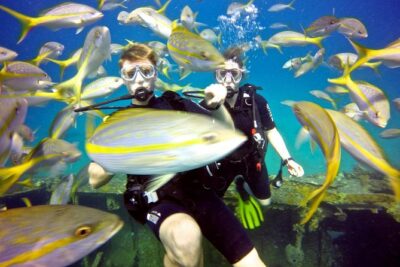
Discover Scuba Diving with No Certification in St Thomas
Read our review →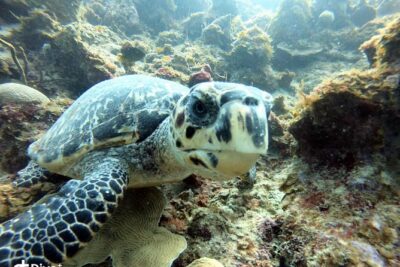
Private Full Day Guided Snorkeling or Diving Charter in St Thomas
Read our review →Browse the lists this tour appears in